


Embroidery Thread
Why Choose Us
Customizable
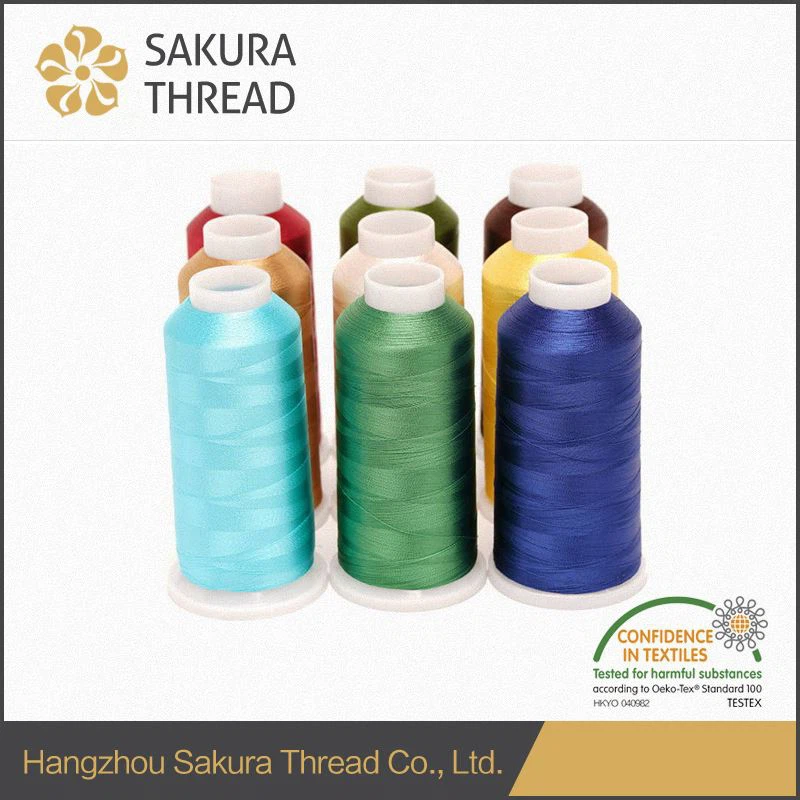
We offer a wide range of thread colors, types, and sizes, allowing our clients to choose the thread that best meets their needs.
High-quality products
We are committed to producing the highest quality embroidery thread, quilting thread, and other sewing products. We use only the best materials and the latest manufacturing processes to ensure our products are of the highest quality.
Fast delivery
We know that our customers rely on us for timely delivery, and we pride ourselves on our ability to deliver orders quickly and efficiently.
Wide product range
They offer a broad range of embroidery threads, including viscose, polyester, rayon, metallic, and specialty threads like glow-in-the-dark and water-soluble threads.
What Is Embroidery Thread?
Embroidery thread is a type of thread that is specifically designed for use in embroidery projects. It typically consists of a fine, smooth thread that is available in a wide range of colors and finishes, including metallic, shiny, and matte. Embroidery thread can be made from a variety of materials, including cotton, silk, rayon, and polyester, and is often used to create intricate designs and patterns on fabrics and other materials. It is generally stronger and more durable than regular sewing thread, which makes it well-suited for embroidery work.


Advantages Of Embroidery Thread
Durability: Embroidery thread is strong and durable, making it perfect for sewing designs onto fabrics that will be subjected to wear and tear.
Versatility: Embroidery thread can be used for a variety of sewing projects, from intricate designs to simple stitches.
Color options: There is a wide range of colors available in embroidery thread, allowing for more creative freedom when creating designs.
Sheen: Embroidery thread has a lustrous sheen that adds a special touch to any project.
Easy to use: Embroidery thread is easy to thread through a needle and manipulate, making it a good choice for beginners.
Resistance to fading: Embroidery thread is resistant to fading, which means that the colors will remain bright and vibrant over a long period of time.
Easy to maintain: Embroidery thread is easy to wash and maintain, with most threads being machine washable.
Compatibility: Embroidery thread is compatible with a variety of materials, including cotton, polyester, and silk.
Different Types Of Hand Embroidery Threads


Stranded Embroidery Cotton: These are the most common embroidery threads. It comes in a myriad of colors, each identified by a color code. The color codes are different for each brand. The popular brands are Anchor and DMC.
The Stranded Embroidery Cotton is also called ‘the embroidery floss’. It is made of 6 strands that are separable and often separated to adjust the thread’s thickness as required for the embroidery.
Overdyed threads: Overdyed threads include two or three shades of different colors in a single thread. They can come in stranded cotton, Perle cotton, silk, or even wool.
Metallic: Beautiful, but a wild child, the metallic thread is often used as a highlighter in surface embroidery. It is used in combination with the other embroidery threads. Gold, silver, copper, and platinum are the most popular colors, though they can come in standard colors.
Metallic threads can be a challenge to work with. It not only wears easily but also tangles and snags as quickly. So, here are some tips- Cut shorter lengths of thread each time. Use fewer strands to stitch. A big needle will definitely help in reducing the thread friction as it passes through the fabric. Damping the threads lightly will help, or use a thread conditioner to tame this wild thread a bit. Patience is essential to work with this thread. Avoid using this on fabric that undergoes heavy or frequent washing.
Silk: Silk threads often come in spools and in vibrant colors. The thread is thin and needs to be layered to make the required thickness. Silk thread is great for needle painting and fine embroidery. Being thin, it can be used to couch down thicker threads.
Novelty Threads: Novelty threads are similar threads with fancy textures and are used as an addition over other embroidery work. These threads can come in cotton, synthetic, wool, and can include laces too.
Variegated: Variegated threads are threads that combine different shades of a single color in the same yarn. They can come in stranded cotton, Perle cotton, silk, or even wool. The effect left by these threads are beautiful and can be particularly attractive when used cleverly on your project.
Rayon: Rayon threads are synthetic and have a high sheen. It got popular because it is inexpensive and is mainly used in Brazilian Dimensional Embroidery. This thread is manufactured so that it gets a ‘z twist’ in contrast to the ‘s twist’ on a cotton thread. Due to this, many embroidery stitches need to be modified in their technique to maintain the outcome.
Crochet: Crocheting can be done using any kind of thread. The crochet thread in turn can be tried for hand embroidery too. It could wear off easily while passing it through the fabric often, and so, shorter lengths are cut in order to save from the loss of sheen.
You can use embroidery thread on your regular sewing machine. Threads used for embroidery work are made from rayon, which can be useful for finished projects as it adds a layer of strength to the clothing. You must consider these things. Always lower the feed dog of your sewing machine when using embroidery cotton thread. Make sure to check your bobbin before inserting it. Do not keep your bobbin empty. For an excellent end-product result, avoid using old thread as the quality of the thread is essential. Machine embroidery has become dominant in today’s fashion world. Dress designers often choose machine embroidery over hand embroidery. The best kind of thread used for embroidery should be thick and smooth to run on machines. It aims at giving a soft feel to the body. The most commonly used threads for machine embroidery are rayon, cotton, metallics, silk, and polyester. Hand embroidery shows the best results if you use stranded embroidery cotton thread. Besides being one of the preferred and most commonly used threads, the cotton thread has six strands. You can either use the entire six strands to thread your needle or use them separately, depending on the material or the work. Rayon embroidery floss is the shiniest, but also challenging to work with. Since they will tangle easily, try using short lengths of thread while working. For better results, dampen the thread for a smoother finish. When working with colorful threads, try pre-washing them. This will ensure that there is no color bleeding afterward.
Types And Characteristics Of Embroidery Thread
First, pure cotton embroidery thread: Pure cotton fine embroidery thread is made of single yarn twisted, about 40 color systems, and each color system from light to deep about 6 ~ 9 color levels. It can be used in strands, pure cotton fine thread in the rough substrate embroidery should pay attention to the use of strands embroidery, otherwise the embroidered pattern is easy to foam and expose the substrate, uneven.
Pure cotton coarse embroidery thread is twisted by 3 yarn strands, the color system is less, and the color level of each color system is 3 to 5, generally not used in strands, at most two strands are used in strands. Suitable for embroidery on linen or velvet cloth.
Two, strands: The ply line is mostly imported embroider thread from abroad, which is composed of 6 strands. The line itself is shiny, the color is also very elegant, each color system contains gray components, such as gray green, gray powder, gray blue and so on. Double import line is the most suitable for doing knitting painting, embroidery painting and so on.
Third, machine embroidery thread: Machine embroidery thread as the name suggests is the thread used on the sewing machine, the texture is very strong, very strong, not easy to break the strand, the use of the sewing machine effect is very good. This line is not suitable for manual embroidery, because it contains talc powder and pulp components, manual embroidery is easy to kill knot, the affinity of embroidery thread and cloth is poor, embroidery thread is not easy to straighten out when embroidery.
Four, true silk thread: True silk thread is a kind of embroidery thread unique to the south of China, just like our ink painting, only in China. True silk thread is suitable for embroidery on soft substrates such as satin and silk, and can also be double-sided embroidery on glass yarn. With real silk thread embroidered animals, its unique luster performance of animal fur is excellent.
Five, wool: Wool is generally suitable for knitting embroidery, there are fine wool, medium and thick thread, thick twist thread, ply line. Note that heavily twisted or ply thread should be used for embroidery on heavy fabrics.
Six, Gold and silver thread: Gold and silver thread is generally suitable for gold embroidery and diamond embroidery. Due to the brittle texture of gold and silver thread, it is not suitable for more complicated needlework.
Seven, Ribbons: A ribbon is a piece of very fine colored tape woven by a machine. It is suitable for use on coarse and thick substrate, and can also be mixed with coarse embroidery thread, and the effect is very good. If it is matched with beaded embroidery and sequin embroidery, the picture effect will be more colorful.
Eigh, polyester embroidery thread:The characteristics of polyester embroidery line are able to withstand chemicals and often wash clothes, reducing the phenomenon of clothing fading and decolorization, so many hotel uniforms, and some stone ground blue jeans, sportswear or some children's clothing will be made of polyester. In general, polyester thread is tougher and stronger than rayon embroidery thread. When embroidering, the polyester thread can withstand the higher tension of the embroidery machine, which can make the machine run faster; And its fire resistance is high, even if the polyester is close to the flame, it is not easy to catch fire.
The thread of polyester silk is not as stable as that of rayon, because the composition is polyester fiber silk, so it will be more elastic. We can cut the rayon thread to do the experiment, pull the thread with a little force, and then let go, we will find that the embroidery thread does not shrink; On the contrary, pull the polyester in the same way, once released, the polyester line will return to the original length, so there is a chance to cause wrinkles, so in the embroidery line tension adjustment Settings, need to be more precise.
Nine, rayon embroidery thread: The difference between the nature of rayon embroidery line and polyester embroidery line is very small, the advantage of the former is that the color choice is more, more close to nature, in addition, the stability of rayon is higher than that of polyester line, even after the embroidery machine is moved and pulled, it will not shrink significantly.
Embroidery: Embroidery is the process of decorating fabric or other materials with needle and thread. Embroidery thread is used to create intricate designs and patterns on clothing, home décor items, and other textiles.
Cross-stitching: Cross-stitching is a popular form of embroidery that involves stitching a series of X-shaped stitches onto a fabric grid. Embroidery thread is used to create colorful and detailed cross-stitch designs.
Crocheting: Embroidery thread is used in crocheting to create small details and accents on crochet projects. It is particularly useful for creating intricate patterns on doilies and other delicate crochet items.
Knitting: Embroidery thread can be used in knitting to add decorative details to knitted items such as scarves, hats, and mittens.
Hand-sewing
Embroidery thread is often used in hand-sewing projects to create decorative topstitching, French seams, and other decorative stitching techniques.
Beading
Embroidery thread can be used in beading to string beads together to create intricate patterns and designs.
Quilting
Embroidery thread is used in quilting to add decorative stitching to patchwork quilts, often called "quilting in the ditch." It can also be used to create colorful embroidery designs on quilt blocks.

The process of making embroidery thread involves several steps:
●Spinning: The raw material, usually cotton or rayon, is spun into yarn on large machines.
●Dyeing: The yarn is then dyed in various colors using colorfast dyes.
●Winding: Once dyed, the yarn is wound onto spools or cones in specific weights and lengths.
●Mercerizing: Mercerization is a process where the yarn is treated with sodium hydroxide to increase its tensile strength, resulting in a smoother, more lustrous thread.
●Embroidery: The final step is using the embroidery thread for decorative stitching in embroidery.
Essential Tips For Caring For Your Embroidery Thread
Proper storage is crucial for preserving the quality of your embroidery threads. Prevent tangling, dust accumulation, and colour fading by selecting suitable storage options. Clear plastic boxes, thread racks, or floss bobbins are excellent choices. Remember to store your threads in a cool, dry place away from direct sunlight, as prolonged exposure can cause colour fading.
When threading your needle, avoid exerting excessive force on the thread. Pulling too hard can strain the fibres, potentially leading to breakage or damage. Instead, gently guide the thread through the needle's eye, ensuring a smooth and untangled process.
Knots in your thread can create tension, which may result in breakage and uneven stitches. Prioritise keeping your thread tangle-free while working on your projects. Should a knot occur, patiently untangle it without applying excessive force to preserve the thread's integrity.
Maintaining clean hands before beginning your embroidery is crucial. Oils and dirt present on your hands can transfer onto the thread, leading to potential staining. By taking this simple step, you can significantly preserve the appearance and integrity of your embroidery threads.
While metallic threads add a captivating sparkle to your projects, they tend to be more delicate than other thread types. When working with metallics, use a larger needle to prevent fraying and handle the thread with utmost care to preserve its metallic sheen.
If you're working with Rainbow Embroidery threads, remember that the color sequence is essential to maintain the desired pattern effect. When cutting your thread, be mindful of the color sequence and strive to start each new length with the same color order as before.
By implementing these essential care practices, you can enhance the lifespan of your embroidery threads and elevate your crafting experience. Well-maintained threads are easier to work with, resulting in higher-quality final products. Dedicate time to caring for your threads, and witness the benefits in every meticulously crafted stitch of your embroidery.
Our Factory
Our Group has passed the certifications of ISO9001:2008 quality management system and ISO14001:2004 environment management system. Furthermore, threads produced by us have Oeko-Tex-Standard 100 and Intertek certificates. "Sakura" brand threads are exported to Europe, the USA, Southeast Asia and South Africa. Those products are reliable in environmental protection and quality, and open the world market. They will bring you prosperity and great wealth.


