


Thread
Wholesale Thread Supplier
Mainly used for clothes, accessories’ interspersing embroidery and knit, emblems with metal gloss, labels, label sports clothes, leather jeans clothes, curtains, home textiles,hats, bags, leisure clothes, outdoor products, high class emblems and appliques,Fineness cloth, laces, silk, knitting cloth and any embroidery on underwear; patters consist of letters and little letters; cloth stuck embroidery,Underwear,Home textile products,Baby clothes,Sweater,etc.
Why Choose Us
Customizable
We offer a wide range of thread colors, types, and sizes, allowing our clients to choose the thread that best meets their needs.
High-quality products
We are committed to producing the highest quality embroidery thread, quilting thread, and other sewing products. We use only the best materials and the latest manufacturing processes to ensure our products are of the highest quality.
Fast delivery
We know that our customers rely on us for timely delivery, and we pride ourselves on our ability to deliver orders quickly and efficiently.
Wide product range
They offer a broad range of embroidery threads, including viscose, polyester, rayon, metallic, and specialty threads like glow-in-the-dark and water-soluble threads.
What Is Thread?
Thread is made from a variety of materials such as cotton, polyester, silk, and nylon. It is a long, thin strand of twisted fibers that is used for sewing or weaving. The fibers are typically spun together into a continuous length and then wound onto a spool or cone for easy use. The type of thread used will vary depending on the project and the materials being worked on. For example, cotton thread is good for quilting and embroidery, while polyester thread is often used for sewing clothing and upholstery.


Thread can be made of many different fiber, including (but not limited to):
●Cotton: Beloved by quilters. Natural fiber.
●Cotton/polyester: Strong but has the matte look of cotton. Cotton is a natural fiber; poly is synthetic.
●Linen: Usually too thick for garment sewing. Used to sew accessories. Natural fiber.
●Nylon: Strong. Synthetic fiber.
●Polyester: Stronger, stretchier, and smoother than cotton. Most common sewing thread fiber. Synthetic fiber.
●Rayon: Shiny and soft with vivid colors. Starts as natural fiber but is heavily processed.
●Rubber: For stretch fabrics. Natural fiber.
●Silk: Strong but will degrade over time. Used for hand sewing, beading, buttons.
●Wool: Thick and rough in texture. Natural fiber.
How Is Thread Made?
●Bonded: Coated with resin to reduce friction and increase strength. May not be usable in a domestic sewing machine.
●Corespun: Spun (see below) cotton or poly is wrapped around a polyester filament (fiber of a continuous length). Strong with low-to-moderate lint creation.
●Filament: Long, thin strands of fiber (vs. shorter staple fibers). Made of synthetic fibers, except for silk filament. Low lint, but not as strong as corespun.
●Gassed: Also called silk finish or polished cotton. Cotton thread is passed through a flame to burn off lint.
●Glazed or coated: Cotton coated with wax, resin, or starch and polished to increase shine and strength. Not recommended for machine sewing.
●Mercerized: Cotton that’s been dunked in a caustic solution to improve its dyeability, strength, and luster.
●Monofilament: A single strand of fiber — think fishing line.
●Spun: Staple fibers (fibers of a discrete length) of cotton or poly are spun into single yarn plies and twisted together. Low cost, but more lint and not as strong as filament or corespun threads.
●Textured: Poly or nylon is fluffed up by a mechanical process to make it more elastic.
There are three main categories of threads based on their construction method:
●Spun thread:This is your regular thread, the most widely used thread, and can be made with either natural or artificial fibers. Spun polyester is accepted as the best in this category, for the same thickness it’s generally stronger than cotton.
The fibers are spun into yarn (the same old process my great-grandmother was doing at home), then multiple strands are twisted together.
●Corespun thread (sometimes also called poly-wrapped poly core or Perma core): The thread has an inner core made out of a single filament of polyester around which regular spun fibers are wrapped. Because of the filament core, this thread is stronger than the regular thread and isn’t common for regular home use but it’s used for high-speed sewing.
●Filament or monofilament thread :Is made out of a long filament, as the name suggests; usually polyester.

When Using Thread Construction Important Things To Know


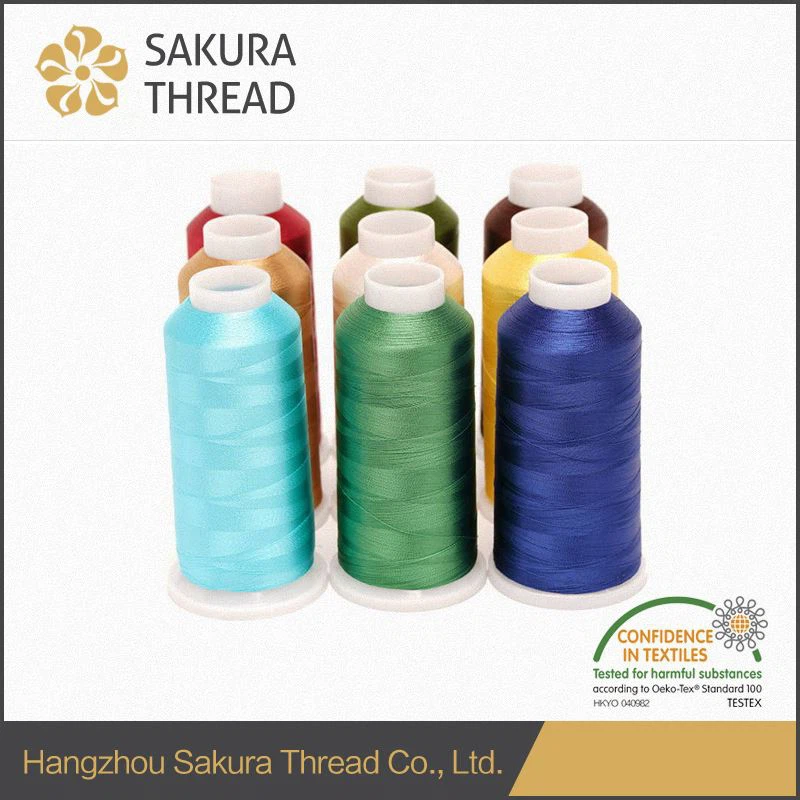
Choose the right thread material: There are different types of thread materials available, including cotton, polyester, nylon, and silk. Select the thread material that best suits your project.
Use the proper thread weight: Thread weight refers to the thickness of the thread. Choose the thread weight that is appropriate for your fabric type and intended sewing application.
Match the thread color: To ensure a professional-looking finished product, choose a thread color that matches the color of your fabric as closely as possible.
Adjust your sewing machine tension: The tension on your sewing machine may need to be adjusted depending on the type of thread and fabric you are using. Be sure to check your machine manual for instructions.
Wind the bobbin properly: The bobbin should be wound with the same thread that is used on the top spool. Wind the bobbin to the appropriate tension and make sure it is inserted correctly into the machine.
Change the needle regularly: A dull or damaged needle can cause thread breakage and snagging. Switch out your needle after every project or if it becomes dull.
Use quality thread: Cheaper threads may be more prone to breakage and can cause frustration during the sewing process. Invest in high-quality thread for best results.
Features Of Winding Stitch Embroidery
Continuous thread: Winding stitch embroidery is typically worked with a continuous thread that is wound around previously stitched threads to create a spiral or coil pattern.
Textured appearance: The overlapping threads of the winding stitch embroidery technique create a textured appearance that is often used to add depth and dimensionality to designs.
Versatility: Winding stitch embroidery can be used to create a variety of designs and patterns, including flowers, leaves, and other organic shapes.
Simple to learn: The basic winding stitch is relatively easy to learn and can be used to create a range of patterns and designs, making it an accessible embroidery technique for beginners.
Contrast color: Winding stitch embroidery is often worked in a contrasting color to the underlying fabric, highlighting the texture and depth of the stitching.
Flexibility: The coiling threads of the winding stitch allow for a degree of flexibility, making it an ideal technique for use on curved or irregular surfaces.
Durable: Because the threads of the winding stitch are coiled and overlapped, they create a robust and durable embroidery pattern that can withstand wear and tear over time.
Choose the right fabric: Before you start embroidering with fire retardant thread, make sure the fabric you are using is also fireproof. Cotton or linen is a good choice.
Thread your needle: Thread your needle with the fire retardant embroidery thread. Make sure to secure your knot so that it does not come undone while embroidering.
Start embroidering
Begin stitching your design on the fabric. Follow your pattern closely, using the right stitch for the design. You can use any embroidery stitch that you prefer.
Clean up
Once you have finished embroidering, it's essential to clean the area thoroughly. Brush away any loose threads or debris around the design.
Finishing
If you have made any mistakes during the embroidery, cut your thread, and try again. Once you have completed your embroidery, tie off your thread, trim the excess, and admire your beautiful work.

The following are the benefits to experience when using high tenacity filament sewing thread in the production process:
●It responds to tension changes and is very stable, therefore, reducing the thread breakage and thread replacement during sewing.
●It improves productivity and is very appropriate with fine seams for shoe sewing, professional clothing, and leather furniture or goods.
●It has a soft finish with superior low friction lubrication which reduces the effects of needle heat and abrasion.
●It provides good seam durability, and excellent chemical and mildew resistance.
●It has good abrasion resistance and stable sewing performance on automatic sewing machines that is, consistent sewing or stitching formation and neat seam appearance.
It has large elongation and good elasticity, and the tensile length at the moment of breaking is three times longer than the cotton thread of the same specification.Used for sewing chemical fiber, woolen cloth, leather and elastic clothing. The biggest advantage of nylon sewing thread is transparency. Because the thread is transparent and has good color property, it reduces the difficulty of sewing wiring and has broad prospects for development. However, due to the high rigidity and low strength of the transparent thread on the market, the stitch is easy to float on the surface of the fabric, and the high temperature resistance, the sewing speed cannot be too high. At present, this kind of thread is mainly used for applique, cutting edge and other parts that are not easily stressed.

Our Factory
Our Group has passed the certifications of ISO9001:2008 quality management system and ISO14001:2004 environment management system. Furthermore, threads produced by us have Oeko-Tex-Standard 100 and Intertek certificates. "Sakura" brand threads are exported to Europe, the USA, Southeast Asia and South Africa. Those products are reliable in environmental protection and quality, and open the world market. They will bring you prosperity and great wealth.


