


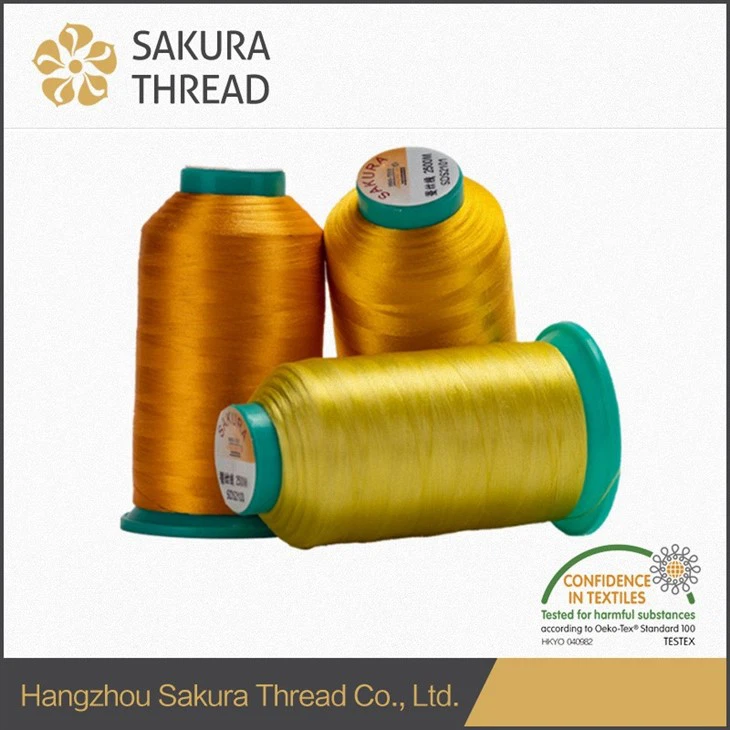
With the continuous improvement of environmental awareness, more and more people have begun to pay attention to the environmental performance of daily necessities. As a common textile, the biodegradability of sewing thread has also become the focus of people's attention. This article will explore the biodegradability of sewing thread and its impact on the environment.
Biodegradability of Sewing Thread
The biodegradability of sewing thread mainly depends on its material. Common sewing thread materials include natural fibers such as cotton, silk, and wool, as well as synthetic fibers such as polyester and nylon. Among them, natural fibers usually have good biodegradability, while synthetic fibers are relatively poor.
1. Natural fibers: Natural  fibers such as cotton, silk, and wool are extracted from plants or animals, so they can be decomposed by microorganisms in the natural environment and eventually converted into water and carbon dioxide. This characteristic makes sewing threads made of natural fibers not pollute the environment after use.
2. Synthetic fibers: Synthetic fibers such as polyester and nylon are made from fossil fuels such as petroleum. They are difficult to be decomposed by microorganisms in the natural environment, so they may cause long-term pollution to the environment. However, in recent years, there are also some new synthetic fibers, such as polylactic acid (PLA), which have good biodegradability and can be decomposed by microorganisms under certain conditions.
Environmentally friendly selection of sewing thread
In order to reduce the impact on the environment, it is very important to choose biodegradable sewing thread. Here are some suggestions:
1. Choose natural fibers: Try to choose sewing threads made of natural fibers such as cotton, silk, and wool. These threads are not only biodegradable, but also generally softer and more comfortable.
2. Pay attention to certification marks: Some sewing thread products may have environmental certification marks, such as OEKO-TEX®, GOTS, etc. These marks indicate that the products meet certain environmental standards.
3. Consider recycled fibers: Some sewing threads are made of materials such as recycled plastic bottles. Although these threads are not natural fibers, their production process can reduce the impact on the environment.
The biodegradability of sewing thread is an important environmental issue. By choosing natural fibers, paying attention to environmental certification marks, and considering recycled fibers, we can reduce the impact of sewing threads on the environment and contribute to protecting the earth.


