

Elongation at break is a crucial mechanical property that significantly impacts the performance and usability of rayon embroidery thread. As a supplier of high - quality rayon embroidery thread, understanding this concept is essential for both us and our customers.
Understanding Elongation at Break
Elongation at break refers to the maximum amount of stretching a material can undergo before it breaks. In the context of rayon embroidery thread, it is measured as a percentage. For example, if a thread has an elongation at break of 50%, it means that the thread can be stretched to 150% of its original length before snapping.
Rayon, a semi - synthetic fiber derived from natural cellulose, has a unique structure that gives it certain characteristics related to elongation. The molecular chains in rayon are arranged in a way that allows for some degree of stretching. When a force is applied to the thread, the molecular chains start to align and slide past each other, causing the thread to elongate.
Factors Affecting the Elongation at Break of Rayon Embroidery Thread
1. Fiber Quality
The quality of the rayon fiber used in the thread production plays a vital role. High - quality rayon fibers have more uniform molecular structures, which can better withstand stretching forces. These fibers are less likely to have weak points or irregularities that could cause premature breakage. For instance, if the rayon is made from pure and well - processed cellulose, it will generally have a higher elongation at break compared to lower - quality rayon with impurities.
2. Manufacturing Process
The way the rayon thread is manufactured also affects its elongation at break. During the spinning process, the tension applied to the fibers can influence their alignment and strength. If the spinning is done under consistent and appropriate tension, the resulting thread will have better mechanical properties, including a higher elongation at break. Additionally, any post - processing treatments such as heat setting or chemical treatments can modify the fiber's structure and thus its elongation characteristics.
3. Thread Thickness
Thicker rayon embroidery threads typically have a higher elongation at break compared to thinner ones. This is because thicker threads have more fibers bundled together, which can distribute the applied force more effectively. A thicker thread can withstand more stretching before the individual fibers start to break.
Importance of Elongation at Break in Embroidery
1. Design Flexibility
A thread with a high elongation at break allows for greater design flexibility in embroidery. Embroiderers can create more complex and dynamic designs that involve stretching or pulling of the thread. For example, in free - motion embroidery, the thread needs to be able to stretch as the needle moves in different directions. If the thread has a low elongation at break, it is more likely to break during the embroidery process, ruining the design.
2. Durability of the Embroidery
The elongation at break also affects the durability of the embroidery. When the embroidered fabric is washed, stretched, or worn, the thread needs to be able to withstand these mechanical stresses. A thread with a high elongation at break is less likely to break under normal wear and tear, ensuring that the embroidery remains intact for a longer time.
Our Rayon Embroidery Threads and Elongation at Break
At our company, we take great care in ensuring that our rayon embroidery threads have excellent elongation at break properties. We source the highest - quality rayon fibers and use advanced manufacturing processes to produce threads that can meet the diverse needs of our customers.

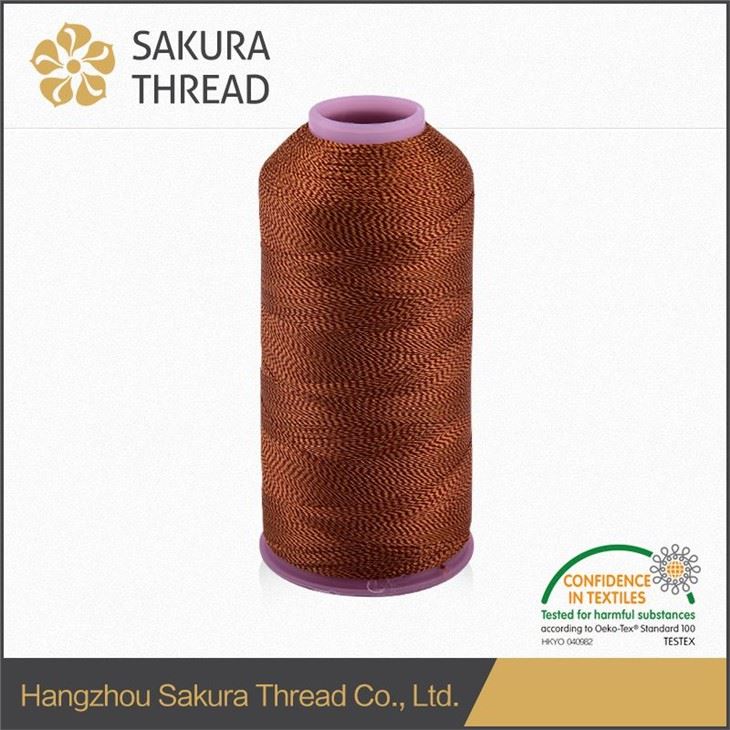
We offer a wide range of rayon embroidery threads, including Multicolor Glow in The Dark Embroidery Thread. This unique thread not only has a high elongation at break but also adds a special visual effect to the embroidery. The glow - in - the - dark feature makes it perfect for creating eye - catching designs, and its ability to stretch ensures that the embroidery process is smooth and the final product is long - lasting.
Another popular option is our Grey Embroidery Thread. Grey is a versatile color that can be used in a variety of embroidery projects. Our grey rayon thread has been carefully engineered to have a high elongation at break, allowing for easy handling and beautiful, durable embroidery.
We also have Rainbow Embroidery Thread, which is a favorite among embroiderers for creating colorful and vibrant designs. The thread's high elongation at break ensures that the colors remain intact and the design stays beautiful even after multiple washes.
Measuring Elongation at Break
To measure the elongation at break of our rayon embroidery threads, we use a tensile testing machine. This machine applies a gradually increasing force to the thread until it breaks. The machine then records the length of the thread at the point of breakage and calculates the elongation as a percentage of the original length.
We conduct regular quality control checks on our threads to ensure that they meet our high standards for elongation at break. This way, we can guarantee that our customers receive threads that are not only beautiful but also reliable.
Conclusion
Elongation at break is a critical property of rayon embroidery thread that affects its performance, design flexibility, and durability. As a supplier, we are committed to providing high - quality rayon embroidery threads with excellent elongation at break properties. Our diverse range of threads, including the Multicolor Glow in The Dark Embroidery Thread, Grey Embroidery Thread, and Rainbow Embroidery Thread, offers something for every embroidery project.
If you are interested in purchasing our rayon embroidery threads or have any questions about the elongation at break or other properties of our products, we invite you to contact us for a detailed discussion. We look forward to working with you to meet your embroidery needs.
References
- Textile Institute. Handbook of Textile Testing and Quality Control.
- Morton, W. E., & Hearle, J. W. S. Physical Properties of Textile Fibres.


